
What We Wish Every Homeowner Knew Before Starting Fence Installation
Our team has installed a lot of fences over the years, and we’ve seen one pattern again and again: homeowners in Centerville Tx usually don’t realize how much planning goes into a successful fence installation until it’s already underway. By then, changes are expensive, delays are frustrating, and everyone wishes key decisions had been made sooner. When we slow down at the beginning, though, the project goes smoother, the fence lasts longer, and the final result looks like it always belonged on the property.
We’ve put together the top fence installation “secrets” that contractors like us talk about all the time but homeowners rarely hear up front. These are the behind-the-scenes realities that can save you money, protect you from legal headaches, and help your fence stand strong through Centerville Tx weather for years to come. If you’re thinking about a new fence, knowing these truths now will give you a big head start.
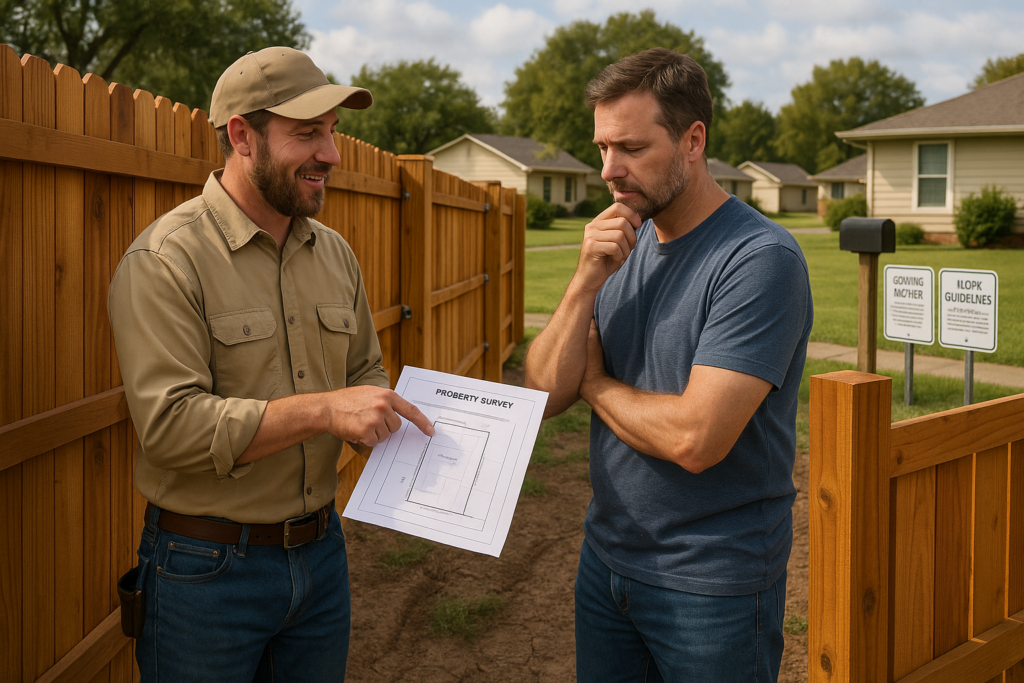
Secret 1: Your Property Lines Are Not a Guessing Game
The biggest surprise for many homeowners is how often property lines are misunderstood. We’ve seen fences built a foot, or even several feet, onto a neighbor’s property simply because someone “eyeballed” the line or trusted an old guess.
Here’s what we always recommend before any fence installation in Centerville Tx:
– Get a recent survey:
A boundary survey is the only reliable way to know exactly where your property starts and ends. It’s not just a technicality; it can prevent expensive relocation later or even legal disputes.
– Check your deed and plat:
Official documents often show easements, utility lines, and building setbacks. A fence placed in the wrong spot can violate these rules and may have to be moved.
– Talk to your neighbors early:
We’ve watched misunderstandings turn into tension between great neighbors. A quick conversation and a look at a survey usually keep everyone on the same page and avoid future conflicts.
When we plan fence installation projects, we always treat property lines as a hard rule, not something we “hope” we got right. That small amount of preparation gives everyone peace of mind.
Secret 2: Local Codes and HOA Rules Can Make or Break Your Fence
Our town may feel relaxed and friendly, but local regulations around fencing are very real. Centerville Tx, like most communities, has guidelines about fence height, placement, and sometimes even appearance.
Some of the common rules that catch homeowners off guard include:
– Maximum fence height in front yards and backyards
– Required distance from streets, driveways, and sidewalks
– Restrictions near intersections for visibility and safety
– Utility and drainage easements that must stay accessible
If you live in an HOA community, their rules can be even stricter. We’ve seen HOA guidelines that specify:
– Approved materials (for example, no chain link or no solid privacy fences)
– Allowed colors and styles
– Which side of the fence must face the street or neighbor
We always urge our clients to:
1. Call the local building department or check the city or county website for fence regulations.
2. Review HOA covenants before settling on a design or height.
3. Ask us to help interpret the rules so we can design a fence that’s beautiful and compliant.
Taking these steps early keeps your fence installation legal and hassle-free and protects your investment from being torn down or modified later.
The Ground Under Your Fence Matters More Than You Think
Our soil and weather in Centerville Tx are unique, and that affects every part of a fence installation. Two fences that look identical above ground can perform completely differently depending on what’s happening underground. The right post depth, concrete use, and drainage strategy will decide if your fence stands straight or slowly leans and sags.
When we evaluate a property, we don’t just look at the layout; we pay close attention to soil type, slope, and water patterns. These natural conditions are powerful forces, and your fence needs to be built to work with them, not against them.
Secret 3: Post Depth and Footing Design Are the Real “Foundation”
Most homeowners focus on pickets and style, but we focus first on posts. If the posts aren’t designed correctly for Centerville Tx conditions, the fence won’t last, no matter how nice it looks at first.
Key things we factor in:
– Frost depth and soil movement:
Posts must be deep enough to resist heaving and shifting. In many cases, we bury posts at least one-third of the fence height plus additional depth where soils are loose or moisture-prone.
– Concrete vs. compacted gravel:
In heavier clay soils or wetter spots, we often use concrete footings for strength. In areas where drainage is a concern, a mix of gravel and concrete or well-compacted gravel can allow water to move while still supporting the post.
– Post size and spacing:
Taller privacy fences or fences exposed to strong winds need larger posts, more concrete, and closer spacing. A typical 6-foot privacy fence might have posts at 6–8 feet apart, but windy or open areas may require adjustments.
We treat the post design like a structural engineering decision, not a guess. That extra care at the base is what keeps your fence from leaning after a couple of storms.
Secret 4: Water Is Your Fence’s Biggest Enemy
In fence installation, we often say, “Follow the water.” Wherever water sits or flows heavily, materials break down faster. In Centerville Tx, sudden downpours, low spots in the yard, and clay soils that hold moisture can accelerate rot, rust, and warping.
Here’s how we manage water around a new fence:
– Assess the yard’s drainage pattern:
We walk the property looking for low points, standing water, and visible runoff paths. These areas inform where we might need higher posts, gravel bases, or slight elevation changes.
– Keep wood out of constant contact with wet soil:
Where possible, we keep wood pickets slightly off the ground and use rot-resistant posts or treated materials. This small gap reduces wicking and greatly extends the life of the fence.
– Use appropriate hardware and fasteners:
Galvanized or stainless-steel nails, screws, and brackets are crucial where moisture is common. Cheap hardware can rust fast and stain or weaken the fence.
– Consider minor grading improvements:
Sometimes a simple regrade near the fence line or adding a shallow swale is enough to redirect water away from the fence and protect your investment.
By respecting water and drainage, we’re not just installing a fence; we’re building a system that stands up to real-world conditions in Centerville Tx, not just a perfect day on paper.
Material Choices: What Contractors Really Recommend (and Why)
When homeowners call us about fence installation, they usually start with a style in mind: “We want privacy,” or “We want something low-maintenance.” Our job is to translate those goals into material choices that hold up in our climate and fit their budget and long-term plans.
We’ve worked with wood, vinyl, ornamental metal, chain link, and hybrid systems around Centerville Tx, and each material has distinct strengths and trade-offs. The secret is understanding what you truly value: appearance, privacy, maintenance, cost, lifespan, or security.
Secret 5: Not All Wood (or Any Material) Is Created Equal
Many homeowners say “wood fence” like it’s one product, but the difference between low-grade wood and high-quality, properly treated lumber is massive.
Here’s what we look at when recommending wood:
– Species:
Cedar and some treated pines tend to resist rot and insects better than lower-grade softwoods. Cedar also usually ages more gracefully and is lighter, which can reduce sagging.
– Treatment and seasoning:
Kiln-dried or properly seasoned boards are less likely to warp and twist as they age. Cheaper boards often come wet and move significantly after installation.
– Fastener quality:
Even the best boards will fail if you attach them with cheap, non-coated nails. We rely on exterior-grade, hot-dipped galvanized or stainless fasteners to prevent rust streaks and loosening.
If a homeowner prefers low maintenance, we may discuss:
– Vinyl fencing:
Excellent for low maintenance and clean appearance. It doesn’t need painting or staining, but quality varies, and it can be more sensitive to impact.
– Ornamental steel or aluminum:
Great for security, strength, and an upscale look, especially for front yards, pools, and view fencing where privacy is not the top priority.
– Chain link (sometimes with privacy slats):
Budget-friendly, secure, and durable, often used for side yards, large properties, or pets. Privacy slats add screening but may require extra attention to wind load.
Our role is to match material to lifestyle. If you’re in Centerville Tx and don’t want to be out there staining every few years, we’ll steer you toward options that give you the look you want with less upkeep.
Secret 6: The “Cheapest” Fence Often Costs More in the Long Run
We understand budget is always part of the conversation. But as contractors, we see every day how a fence that looks cheaper up front becomes more expensive over 5–10 years.
Here are hidden costs of going too cheap:
– Frequent repairs:
Inferior posts, weak hardware, and thin pickets are more likely to break, warp, or pull loose, leading to repeated service calls.
– Shorter lifespan:
A fence that needs full replacement 6–8 years in, instead of 15–20 years, dramatically changes the real total cost of ownership.
– Aesthetics and property value:
A sagging, mismatched, or patchwork-style fence can hurt curb appeal and may even reduce perceived property value when you sell.
We like to walk homeowners through a “lifetime cost” mindset:
– What will this fence cost to install, maintain, and repair over 10–15 years?
– How does that compare to a slightly higher upfront investment in stronger materials or better finishes?
Often, a mid-grade or high-grade option ends up being the smarter financial move for fence installation in Centerville Tx when you consider the full lifespan, not just day-one pricing.
Design, Layout, and Function: How to Avoid Regrets
We have seen plenty of fences that are strong and well-built but don’t quite serve the homeowner’s daily life the way they hoped. Gates in the wrong spot, privacy in the wrong direction, or heights that don’t match real needs can all become annoyances you live with for years.
Our passion is designing fences that fit how you actually use your property. That means thinking about kids, pets, outdoor entertaining, equipment access, and future plans—long before the first post hole is dug.
Secret 7: Gate Placement and Access Are More Important Than Most People Realize
Ask any fence crew, and they’ll tell you: almost every regret we hear from homeowners after a fence installation involves gates. Too few, too small, or in the wrong location.
Here’s how we design smarter access:
– Think about every way you move around your property:
Do you regularly mow, garden, haul firewood, or move large equipment? A gate that’s wide enough and located along your natural pathways can save you hours of frustration.
– Plan for the “biggest thing” that needs to pass:
We ask homeowners about trailers, riding mowers, ATVs, and even future pool or landscape projects. Then we size and place gates to handle those items.
– Consider dual or corner gates:
Sometimes adding an extra side or back gate makes trash, yard work, or neighborhood access smoother. It doesn’t add much cost compared to the convenience it brings.
– Don’t forget security:
We talk through lock options, gate swing direction, and visibility from the house. A secure, well-positioned gate balances convenience with safety.
When we walk a property in Centerville Tx, we literally trace the routes you’ll take and design gates and openings to match real life, not just a straight line on a plot plan.
Privacy, Views, and Neighbor Relationships
Fence height and style decisions have a big impact on how you, your family, and your neighbors experience the space every day.
We encourage homeowners to think about:
– Where do you truly need full privacy?
Patio areas, bedroom windows, or backyard gathering spaces might benefit from a taller, solid fence. Side yards or scenic views may not.
– Can we blend styles?
Sometimes the best solution is a privacy fence in the back and a more open, decorative fence in the front or along a view side. This can create a more welcoming look while still giving you seclusion where it matters.
– How will your neighbors feel?
We always suggest a conversation with neighbors, especially if you’re planning a tall privacy fence along a shared boundary. Sometimes you can even coordinate and share costs on a style you both like.
– Sun, wind, and noise:
The right height and layout can block road noise, reduce visibility from nearby streets, and create sheltered outdoor living spaces.
We see fences not just as boundaries but as tools to shape how your property feels. That’s especially true in a friendly community like Centerville Tx, where good fences truly can help make good neighbors—if you think through the design carefully.
Working With a Professional vs. DIY: What Really Changes
We respect homeowners who enjoy taking on projects themselves, and for some properties, a DIY fence installation can be a rewarding challenge. But we also see where professional planning, tools, and experience make a big difference, especially with tricky terrain, strict rules, or long fence lines.
In our experience around Centerville Tx, the biggest benefits of working with a professional contractor happen in the planning phase, not just in the labor.
What a Good Contractor Brings to Your Project
When we take on a fence installation, we’re not just supplying labor; we’re bringing a full system and process.
You can expect us to:
– Evaluate the site thoroughly:
We look at grade changes, soil conditions, drainage patterns, and access for materials and equipment.
– Interpret and navigate local rules:
From permits to HOA guidelines, we help make sure your fence complies with all applicable requirements.
– Recommend materials and details that fit your goals:
Instead of just asking “wood or vinyl,” we talk about your lifestyle, maintenance tolerance, and budget and then suggest specific solutions.
– Use professional tools and techniques:
From post-hole augers and string-line layout to proper concrete mixing and bracing, we follow methods that have proven themselves over hundreds of projects.
– Stand behind our work:
If something settles, shifts, or fails prematurely, a reputable contractor will come back and make it right according to agreed terms.
This level of planning and accountability often saves homeowners in Centerville Tx both time and money when you factor in corrections, redos, and long-term performance.
When DIY Makes Sense—and When It Doesn’t
We’re honest with people: there are situations where a motivated homeowner can do a solid fence installation on their own, especially for simpler, shorter runs on fairly flat ground with no HOA or complex zoning.
DIY might be a good fit if:
– The terrain is simple, and the layout is straightforward.
– You have the time and are comfortable renting or operating power augers and saws.
– Local regulations are minimal and easy to follow.
– You’re okay taking responsibility if adjustments are needed later.
However, hiring a professional makes more sense when:
– The property has slopes, drainage issues, or complex lot lines.
– You’re close to neighbors, easements, or busy roads.
– You’re investing in higher-end materials and want to protect that investment.
– You value a warranty and a single point of accountability if problems arise.
If you’d like to explore permits and basic guidelines on your own first, many counties and cities post information online. For example, you can search for your local county’s permitting office to review typical fence standards and processes. For broader fence ideas, inspiration, and maintenance tips, national resources like the American Fence Association at https://americanfenceassociation.com/ can also be helpful.
In the end, our goal is to help you choose the path—DIY or professional—that gets you a safe, durable, attractive fence you’re proud of.
We’ve shared these seven fence installation secrets because we’ve seen how much stress and cost they can save homeowners in Centerville Tx when they’re understood up front. Knowing your property lines, respecting local rules, designing strong posts and drainage, choosing the right materials, planning access and privacy carefully, and deciding whether to DIY or hire pros—all of these steps work together to create a fence that truly fits your life and your property.
If you’re ready to start planning a new fence or replace an old one, our team would be glad to walk your property, talk through options, and design a solution tailored to your needs. You can reach us anytime through our website at https://blackdiamondconstruct.com/. We’re here to make your next fence installation smooth, efficient, and built to last.